

Water: The Utility Many Businesses Overlook
July 21, 2026
GLEG Founder Chris Haines Recognised in BusinessCloud’s Inaugural Founder 250
July 31, 2026

UK Energy Market Summary to Friday 24th July 2026
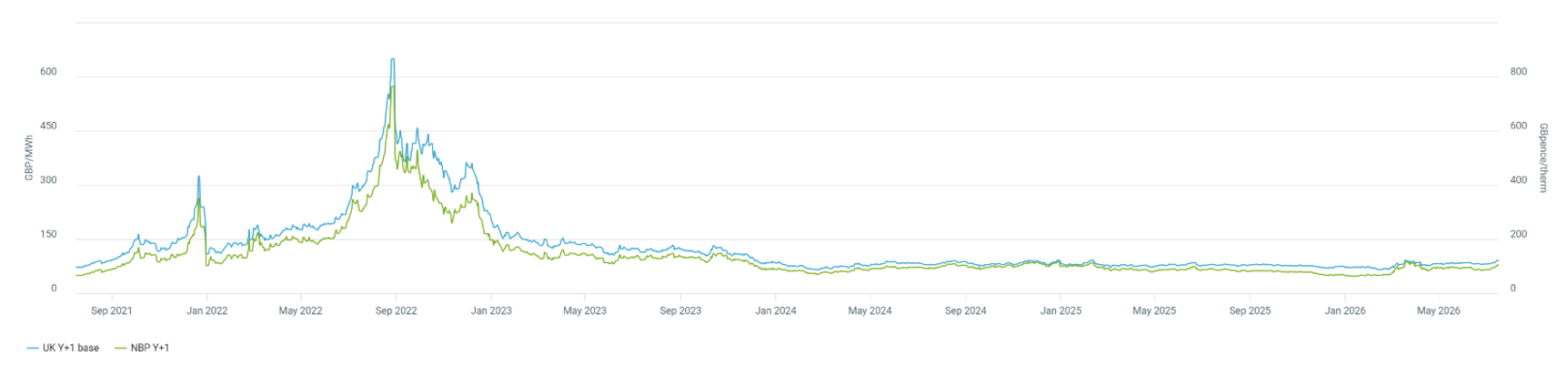
Closing prices 24.07.2026

Wholesale gas and power markets strengthened further during the week ending 24th July as continued US–Iran hostilities and disruption to shipping through the Strait of Hormuz intensified concerns over global LNG availability. UK NBP gas increased by approximately 8–12% to close at around 153p/therm, while European TTF moved above €60/MWh and closed at approximately €63/MWh. Reduced Qatari LNG exports, competition with Asian buyers and strong cooling demand provided further support.
European gas storage increased to approximately 54% but remains around 10 percentage points below last year and 14 percentage points below the five-year seasonal average. The current injection rate is slightly below the pace required to reach the EU’s relaxed 80% target by November. UK and European electricity markets also strengthened as higher gas costs, warm weather and variable renewable output maintained reliance on thermal generation, while European carbon prices closed at approximately €83.50/tonne.
Curve UK Gas & Electricity Markets

Other Energy Markets
Brent crude recorded a third consecutive weekly gain, rising approximately 10% to close at $96.78/bbl after briefly exceeding $100. Restricted tanker movements through the Strait of Hormuz and Houthi attacks affecting Red Sea shipping increased concerns over Middle Eastern crude supply. Following the week’s close, US and Iranian attacks paused and Omani-led mediation continued, providing cautious optimism that shipping conditions could improve and some of the geopolitical risk premium could unwind.
Looking ahead, markets will remain focused on mediation efforts, oil and LNG shipping through the Strait of Hormuz, Qatari LNG exports, European storage injections and summer weather. The pause in hostilities is not yet a formal ceasefire, meaning renewed escalation could generate further volatility. The forward curve remains strongly backwardated, with longer-dated gas and electricity contracts continuing to offer comparatively attractive value for organisations seeking greater budget certainty.