

GLEG UK Energy Market Update 18-05-26…
May 18, 2026GLEG UK Energy Market Update 26-05-26…
May 26, 2026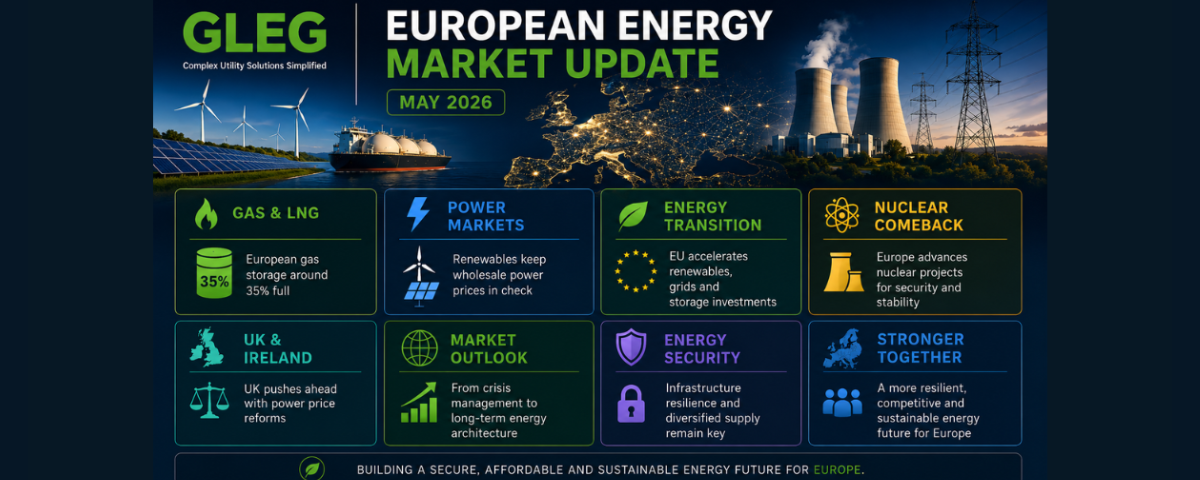
Over the past month, we have seen a major shift in the structure of the European energy system, not only from a pricing perspective but geopolitically as well.
The conversation is no longer simply about replacing Russian gas. It is now about energy security, infrastructure resilience, LNG dependency, nuclear resurgence, grid modernisation, and the challenge of integrating growing renewable generation into power markets across the continent.
Energy Security Is Becoming the New Market Driver
One of the most significant developments has been the increasing impact of the war in Ukraine on energy infrastructure itself.
Ukraine has intensified strikes on Russian refineries, oil terminals and gas infrastructure, while Russia continues targeting Ukrainian power systems and substations. This is no longer a secondary factor influencing markets. It is becoming increasingly central to European energy pricing, volatility and risk assessment.
At the same time, European gas storage levels remain under pressure heading into the next winter cycle. LNG markets are tightening globally, and concerns are growing around Europe becoming increasingly dependent on US LNG imports as Russian supply continues to disappear from the system.
Eastern Europe is emerging as one of the most important regions to watch.
Romania’s Neptun Deep project could reshape gas flows across Central and Eastern Europe over the coming years, while Poland continues accelerating investment into renewables, LNG infrastructure and grid development. The Baltic states are also continuing their historic move away from Russian energy systems and toward deeper integration with Continental Europe.
Europe Is Moving From Crisis Response to Energy Redesign
Across Western Europe, market structures are changing rapidly.
Spain’s renewable growth is beginning to materially suppress wholesale electricity prices during periods of high generation, Germany has reportedly returned to net electricity exporter status, and the UK continues efforts to reduce the influence of gas volatility on electricity pricing.
At the same time, nuclear energy is making a political comeback across parts of Europe as governments increasingly prioritise energy independence and system stability alongside decarbonisation targets.
The broader trend is becoming increasingly clear.
Europe is moving away from short-term energy crisis management and toward the construction of an entirely new energy architecture.
The next five years will likely define Europe’s long-term industrial competitiveness, energy affordability, strategic autonomy, and the future balance between gas, renewables and nuclear power.
For anyone working across energy, trading, procurement, infrastructure or risk, the pace of change across European markets right now is extraordinary.
If you would like to have a chat about your business energy, please get in touch at hello@gleg.co.uk