

ESOS: Is Your Organisation Prepared?
August 13, 2026
GLEG UK Energy Market Update 24-08-26…
August 24, 2026

UK Energy Market Summary to Friday 14th August 2026
Closing prices 14.08.2026

Wholesale gas and power markets rose during the week ending 14th August, reversing the previous week’s decline as optimism over the Strait of Hormuz faded. UK NBP gas increased by approximately 11% to 151p/therm, while European TTF rose by around 6% to €60.50/MWh. Stalled negotiations, further tanker attacks and the threat of continued restrictions on Iranian shipping restored geopolitical risk. An unplanned outage at Norway’s Kollsnes processing plant and limited LNG deliveries into Northwest Europe provided additional support.
European gas storage reached approximately 60.2%, with injections remaining broadly on track for the EU’s relaxed 80% target by November. However, stocks remain around 12 percentage points below last year and materially below normal seasonal levels. Disrupted Qatari LNG exports, competition with Asian buyers and continued reliance on Norwegian supplies leave Europe vulnerable to further disruption or an early start to winter. UK Winter 2026 electricity increased by approximately 8% to £126/MWh, supported by higher gas prices, low renewable output and constraints affecting French nuclear generation. European carbon remained close to €83/tonne.
Curve UK Gas & Electricity Markets

Other Energy Markets
Brent crude increased by approximately 5.9% to $88.52/bbl, reversing the previous week’s decline. Restricted shipping through the Strait of Hormuz, further tanker attacks and disruption to Russian exports from Novorossiysk supported prices. However, weaker demand forecasts, higher OPEC+ production and a substantial increase in US crude inventories prevented a larger rise.
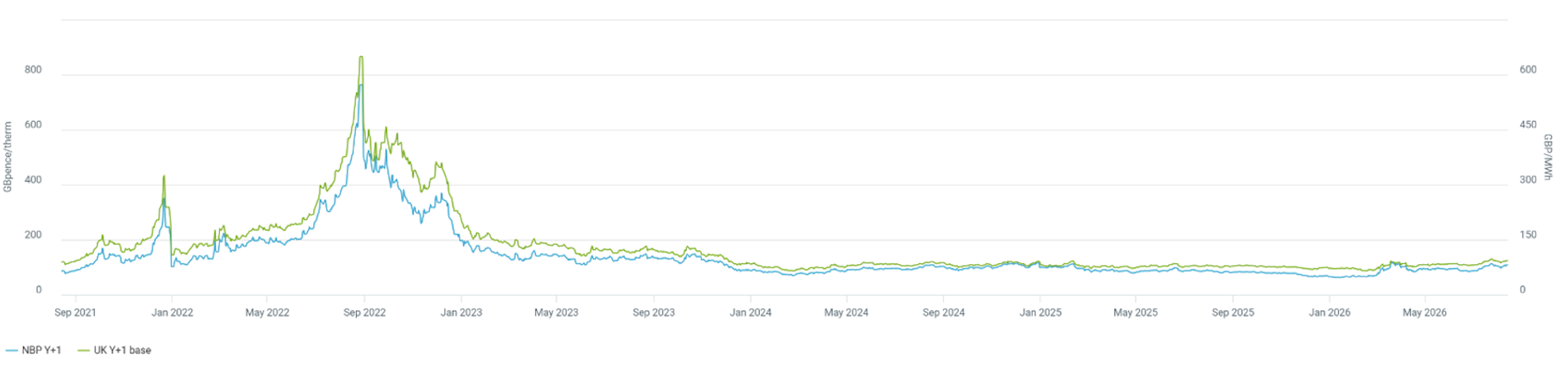
Looking ahead, markets will remain focused on Middle Eastern negotiations, tanker security, the recovery of Qatari LNG exports, Norwegian gas availability, storage injections and late-summer weather. The geopolitical position remains fragile, and renewed disruption could quickly push prices higher. The forward curve remains strongly backwardated, with Calendar 2030 gas and electricity approximately 55% and 46% below Winter 2026 respectively. This supports treating winter and longer-dated exposure separately—phasing near-term cover where budgets are vulnerable while considering selective far-curve purchasing where prices offer acceptable long-term value.