

Proud to Sponsor AFC Fylde Community Foundation’s 24-Hour Padel Event
October 13, 2026
GLEG Market Insights | 14 October 2026
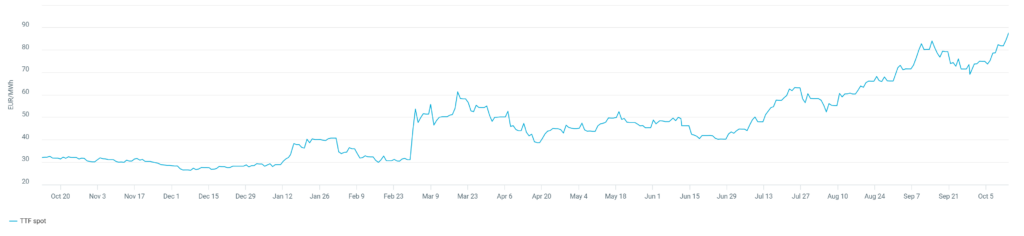
European gas prices climbed to their highest level since December 2022 yesterday, highlighting the pressure facing energy buyers as winter approaches. Dutch TTF gas futures reached €87.20/MWh during trading on Tuesday 13 October, extending their rally for a sixth consecutive day. This was an intraday price, rather than a confirmed closing settlement.
For businesses, the move reinforces the importance of understanding how much energy remains exposed to market prices and what that exposure could mean for budgets.
Why are prices rising?
Three factors are keeping markets nervous:
- Low gas storage: EU storage was reported at approximately 73% full, compared with a five-year average of 89%, leaving a smaller buffer ahead of winter.
- Disruption to LNG supplies: Conflict and shipping restrictions around the Strait of Hormuz continue to constrain supplies, increasing concerns about competition between European and Asian buyers.
- Colder weather forecasts: Lower temperatures expected across central Europe over the coming fortnight have added to concerns about heating demand.
GLEG’s assessment is that this combination leaves the market particularly sensitive to changes in weather and supply. Further disruption could increase prices, while improving conditions could bring relief.
What should businesses be reviewing?
The impact will depend on your contract, purchasing position and consumption. A rise in the benchmark price does not automatically translate into the same percentage increase in your bill.
At GLEG, we believe businesses should be able to answer four questions:
1. How much of our forecast consumption is already secured? Review this by delivery period, particularly across the winter months.
2. What is the financial risk on the remaining volume? Translate market movements into pounds against your budget.
3. Are our consumption forecasts accurate? Increased usage can reduce the percentage covered, even where previously agreed purchases remain unchanged.
4. What is our agreed purchasing strategy? Set clear limits, responsibilities and decision points before the next significant market move.
Look beyond the immediate winter
Our view is that businesses should assess future purchasing periods alongside their immediate exposure. A headline price for November delivery does not tell you what energy will cost for every subsequent season.
Reviewing the full forward curve helps businesses compare delivery periods and consider whether a proportion of future requirements can be secured within their budget and risk policy. Purchasing in stages can spread timing risk, although it cannot guarantee the lowest price.
The priority is a clear view of your position and a strategy that supports commercial decisions.
Understand your exposure with GLEG
We help businesses connect energy procurement, consumption forecasts and budgets, providing clarity on what is secured, what remains exposed and the decisions ahead.
Contact your GLEG Account Manager or email hello@gleg.co.uk to review your energy purchasing strategy.